Introduction
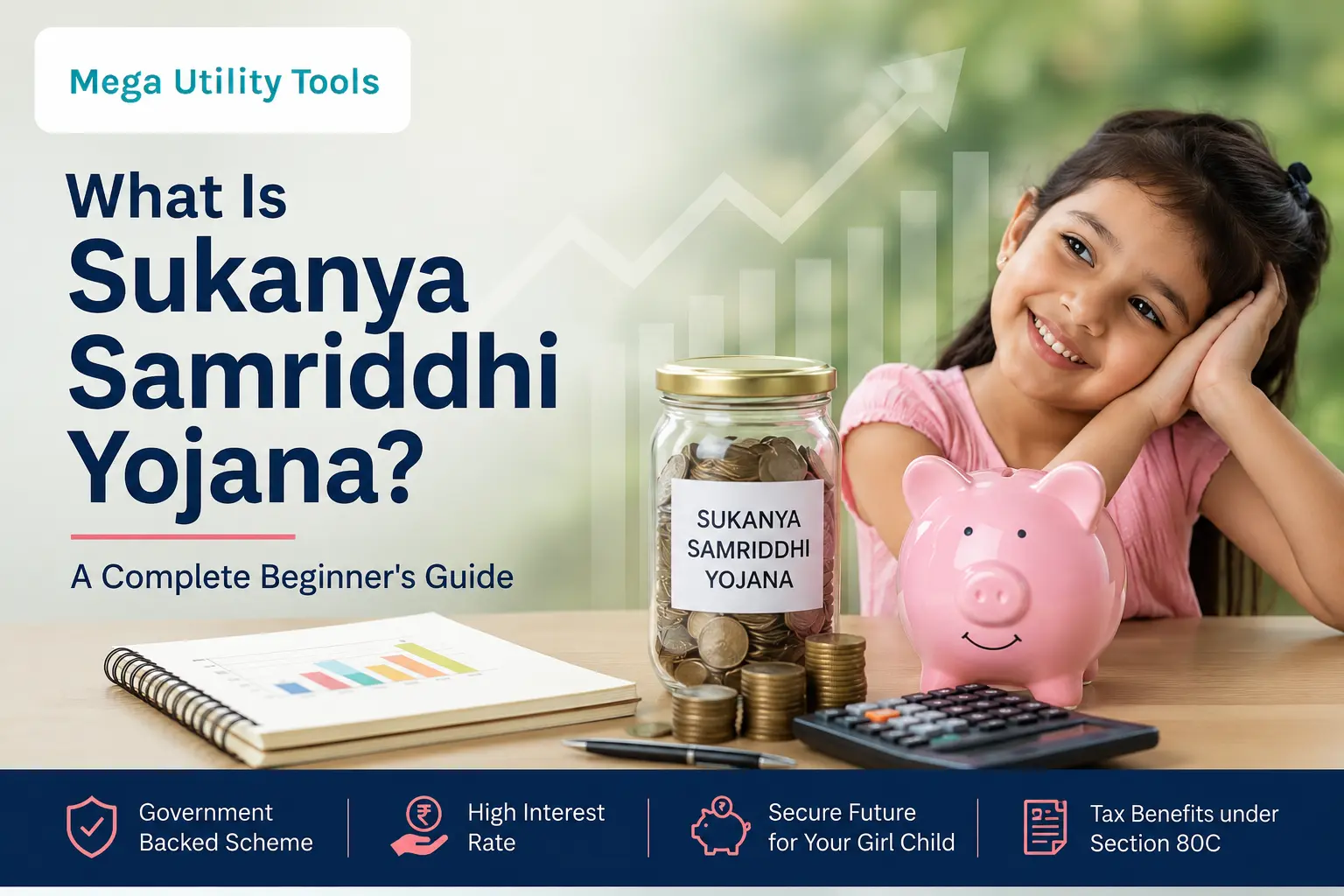
Planning for your daughter’s future is one of the most meaningful financial decisions parents can make. Whether it’s funding higher education, supporting career aspirations, or preparing for future milestones, starting early can make a significant difference. This is exactly where the Sukanya Samriddhi Yojana (SSY) comes in.
Launched by the Government of India under the Beti Bachao, Beti Padhao initiative, Sukanya Samriddhi Yojana is a long-term savings scheme created exclusively for the financial security of a girl child. It combines disciplined saving with the benefits of compounding, helping families build a substantial corpus over time. The scheme offers government-backed safety, tax advantages, and an attractive interest rate that is reviewed every quarter.
Today, many parents also use a Sukanya Samriddhi Yojana calculator to estimate the maturity amount before opening an account. It provides a practical way to understand how regular investments can grow over the years and helps in setting realistic financial goals.
What Is Sukanya Samriddhi Yojana?
Sukanya Samriddhi Yojana is a government-backed small savings scheme designed specifically for the benefit of a girl child. A parent or legal guardian can open the account before the girl turns 10 years old. The account can be opened at authorised banks and post offices across India. Deposits are made for 15 years, while the account matures 21 years after opening.
Unlike many investment products that fluctuate with market conditions, SSY provides a government-declared interest rate that is revised quarterly. This makes it an attractive option for families seeking a balance of safety and long-term growth.
Why Has Sukanya Samriddhi Yojana Become So Popular?
The popularity of SSY is not just because it is government-backed. It also encourages families to develop a consistent saving habit for their daughter’s future.
Some of its biggest advantages include:
- Government-backed security
- Attractive compounded interest
- Long-term wealth creation
- Tax benefits under applicable provisions
- Flexible annual deposits within the prescribed limits
- Suitable for education and marriage planning
These benefits have made SSY one of the preferred long-term savings options for parents looking for stability and predictable growth.
Key Features of Sukanya Samriddhi Yojana
Before investing, it’s important to understand how the scheme works.
Government-Backed Security
Since SSY is supported by the Government of India, many families consider it a reliable savings option for long-term financial planning.
Attractive Interest Rate
The interest rate is reviewed every quarter by the Government. It has historically remained competitive compared with many traditional savings products. Because the rate may change over time, using a Sukanya Samriddhi Yojana interest rate calculator can help estimate potential returns based on the prevailing rate.
Long-Term Investment Horizon
The account matures after 21 years from the date of opening, while contributions are required only for the first 15 years. During the remaining period, the balance continues to earn interest without additional deposits.
Flexible Annual Contributions
Parents or guardians can contribute any amount between the minimum and maximum limits specified by the government during each financial year, making the scheme suitable for different income levels.
Who Can Open an SSY Account?
One of the most common questions among parents is whether they are eligible to open the account.
Generally, the account can be opened:
- By a parent or legal guardian.
- For a resident Indian girl child.
- Before the child completes 10 years of age.
- One account is permitted per eligible girl child, subject to the applicable scheme rules.
Understanding these eligibility conditions beforehand helps avoid unnecessary confusion during the application process.
How Does Sukanya Samriddhi Yojana Work?
The process is simple and designed to encourage long-term saving.
- Open the account in the eligible girl’s name.
- Make annual deposits according to your financial capacity.
- Continue contributions for the required deposit period.
- Allow the investment to benefit from annual compounding.
- Receive the maturity amount when the account completes its tenure, subject to scheme rules.
Many investors use a Sukanya calculator before deciding how much to contribute each year. Seeing estimated maturity values often makes it easier to plan for future education or other long-term goals.
Why Parents Should Start Early
Time plays a crucial role in long-term investing.
The earlier an account is opened, the longer the investment has to benefit from compounding. Even moderate annual contributions can grow into a meaningful corpus over two decades.
Using a Sukanya Samriddhi Yojana scheme calculator or a Sukanya Samriddhi calculator allows parents to compare different contribution amounts and understand how disciplined investing today can support major financial goals in the future.
Rather than waiting until education expenses are just a few years away, starting early provides greater financial flexibility and reduces the pressure of arranging a large amount later.
Deposit Rules and Contribution Period
One of the reasons Sukanya Samriddhi Yojana is popular is its flexibility. Parents or legal guardians can make annual deposits according to their financial capacity, provided they remain within the minimum and maximum limits prescribed by the government for the financial year. Contributions are required for the first 15 years from the date of opening the account, while the account continues to earn interest until maturity at 21 years from the account opening date, subject to the scheme rules. Since these limits and the interest rate may change over time, it’s always a good idea to verify the latest figures before making investment decisions. (nsiindia.gov.in)
The flexibility to choose your annual contribution makes the scheme suitable for families with different income levels. Even if your contribution amount changes from year to year, maintaining regular deposits can help build a substantial corpus over the long term.
How Is the Interest Calculated?
One of the biggest advantages of Sukanya Samriddhi Yojana is the power of compound interest.
Instead of earning interest only on your deposits, the account also earns interest on the previously accumulated interest. Over a long investment period, this compounding effect can significantly increase the maturity value.
For example, imagine two parents investing different annual amounts for their daughters. Although both follow the same scheme rules, the family contributing a higher amount consistently over the contribution period is likely to accumulate a much larger corpus by maturity.
Rather than calculating returns manually, many parents prefer using a Sukanya Samriddhi Yojana calculator. It quickly estimates the expected maturity value based on contribution amount, investment duration, and the applicable interest rate, making financial planning much easier.
Similarly, a Sukanya Samriddhi Yojana interest rate calculator can help illustrate how changes in the declared interest rate may influence long-term returns.
Tax Benefits of Sukanya Samriddhi Yojana
Apart from helping families save for the future, SSY also offers attractive tax advantages under the applicable provisions of the Income Tax Act.
Generally, the scheme is known for its EEE (Exempt-Exempt-Exempt) tax treatment, meaning:
- Eligible investments may qualify for tax deductions under the applicable section of the Income Tax Act.
- Interest earned is generally exempt from tax, subject to prevailing tax laws.
- The maturity amount is also generally tax-exempt under the current scheme provisions. (cleartax.in)
Because tax regulations can change, it’s advisable to refer to the latest government guidelines or consult a qualified tax professional before making financial decisions.
Withdrawal and Maturity Rules
Understanding when and how funds can be accessed is equally important.
Partial Withdrawal
The scheme allows partial withdrawal for eligible purposes, such as higher education, subject to the conditions specified under the scheme.
Account Maturity
The account matures 21 years after it is opened or earlier in certain situations permitted under the official rules. Once matured, the accumulated amount can be withdrawn according to the applicable provisions. (nsiindia.gov.in)
Knowing these rules helps parents align their investment with future educational or financial milestones.
Common Mistakes Parents Should Avoid
Although SSY is straightforward, avoiding a few common mistakes can help maximize its benefits.
Waiting Too Long to Open the Account
Since eligibility is linked to the girl’s age, delaying the decision may result in missing the opportunity to open an account.
Irregular Contributions
While contribution amounts can vary, staying consistent with annual deposits generally supports better long-term savings.
Ignoring Future Financial Planning
SSY is an excellent long-term savings tool, but it works best as part of a broader financial plan that may also include emergency savings, insurance, and diversified investments.
Not Reviewing Interest Rate Changes
The interest rate is revised periodically. Reviewing updates helps you better understand your expected returns.
Not Using Financial Planning Tools
Many families underestimate how much their investments can grow. Using a Sukanya calculator before making annual contributions provides a clearer picture of long-term savings.
How a Sukanya Samriddhi Yojana Calculator Can Help
Planning future savings becomes much easier when you can estimate potential returns in advance.
A Sukanya Samriddhi calculator helps you:
- Estimate the maturity amount.
- Understand the impact of different annual contributions.
- Compare multiple savings scenarios.
- Plan for future education expenses.
- Set realistic long-term financial goals.
Instead of relying on manual calculations, a Sukanya Samriddhi Yojana scheme calculator provides quick estimates, helping parents make more informed financial decisions.
If you’re planning to invest regularly, using the calculator before making contributions can improve your overall financial planning.
Final Thoughts
Sukanya Samriddhi Yojana is more than just a savings scheme—it’s a long-term financial commitment toward securing a girl’s future. Its combination of government backing, disciplined saving, compound interest, and tax advantages makes it one of the most trusted options available for eligible families.
However, successful financial planning is not just about opening an account. It also involves understanding how the scheme works, contributing consistently, reviewing your financial goals regularly, and making informed decisions based on reliable information.
Whether you’re opening a new account or evaluating your future savings, using a Sukanya Samriddhi Yojana calculator can simplify the planning process. It enables you to visualize potential growth, compare contribution strategies, and prepare more confidently for important life milestones.
Starting early, investing consistently, and reviewing your progress periodically can make a significant difference in achieving your long-term financial objectives.
Frequently Asked Questions
1. What is Sukanya Samriddhi Yojana?
Sukanya Samriddhi Yojana is a government-backed long-term savings scheme designed to support the financial future of a girl child through disciplined investing and compound interest.
2. Who can open a Sukanya Samriddhi Yojana account?
A parent or legal guardian can open the account for an eligible resident Indian girl child before she reaches the prescribed age limit under the scheme rules.
3. Why should I use a Sukanya Samriddhi Yojana calculator?
A Sukanya Samriddhi Yojana calculator helps estimate future maturity values based on your planned contributions and the applicable interest rate, making financial planning easier.
4. Is Sukanya Samriddhi Yojana a good long-term investment?
For families seeking a government-backed savings option focused on a girl child’s future, SSY is widely regarded as a strong long-term financial planning tool.
5. Can I increase my annual investment later?
Yes. As long as your contributions remain within the applicable annual limits prescribed under the scheme, you can adjust your investment amount according to your financial situation.