Introduction
If you’re planning to invest in a Fixed Deposit or Recurring Deposit, one of the first things you’ll want to know is: what interest rate can you actually get right now? FD and RD interest rates 2026 vary from bank to bank and change periodically based on RBI policy and each bank’s own funding needs, so relying on old numbers can lead to inaccurate expectations.
This page brings together the latest publicly available FD and RD rates from major Indian banks in one place, along with the official sources so you can verify them yourself. Since interest rates are revised from time to time, we recommend treating the figures below as a reference point and always confirming the exact rate on the bank’s official website before opening a deposit.
What Determines FD and RD Interest Rates?
Bank deposit rates aren’t set randomly. A few key factors influence them:
- RBI Repo Rate: When the Reserve Bank of India changes the repo rate, banks typically adjust their deposit and lending rates in response. A rate hike often (though not always) leads to higher FD and RD rates over time.
- Bank Type: Public sector banks, private banks, and small finance banks price their deposits differently based on their liquidity needs and competitive positioning. Small finance banks often offer somewhat higher rates to attract deposits.
- Tenure: Rates vary significantly by how long you lock in your money. Medium-term deposits (1–3 years) frequently offer the best rates, while very short-term and very long-term deposits tend to offer lower rates.
- Senior Citizen Status: Most banks offer an additional 0.25% to 0.75% interest to senior citizens across tenures.
Latest FD Interest Rates by Bank
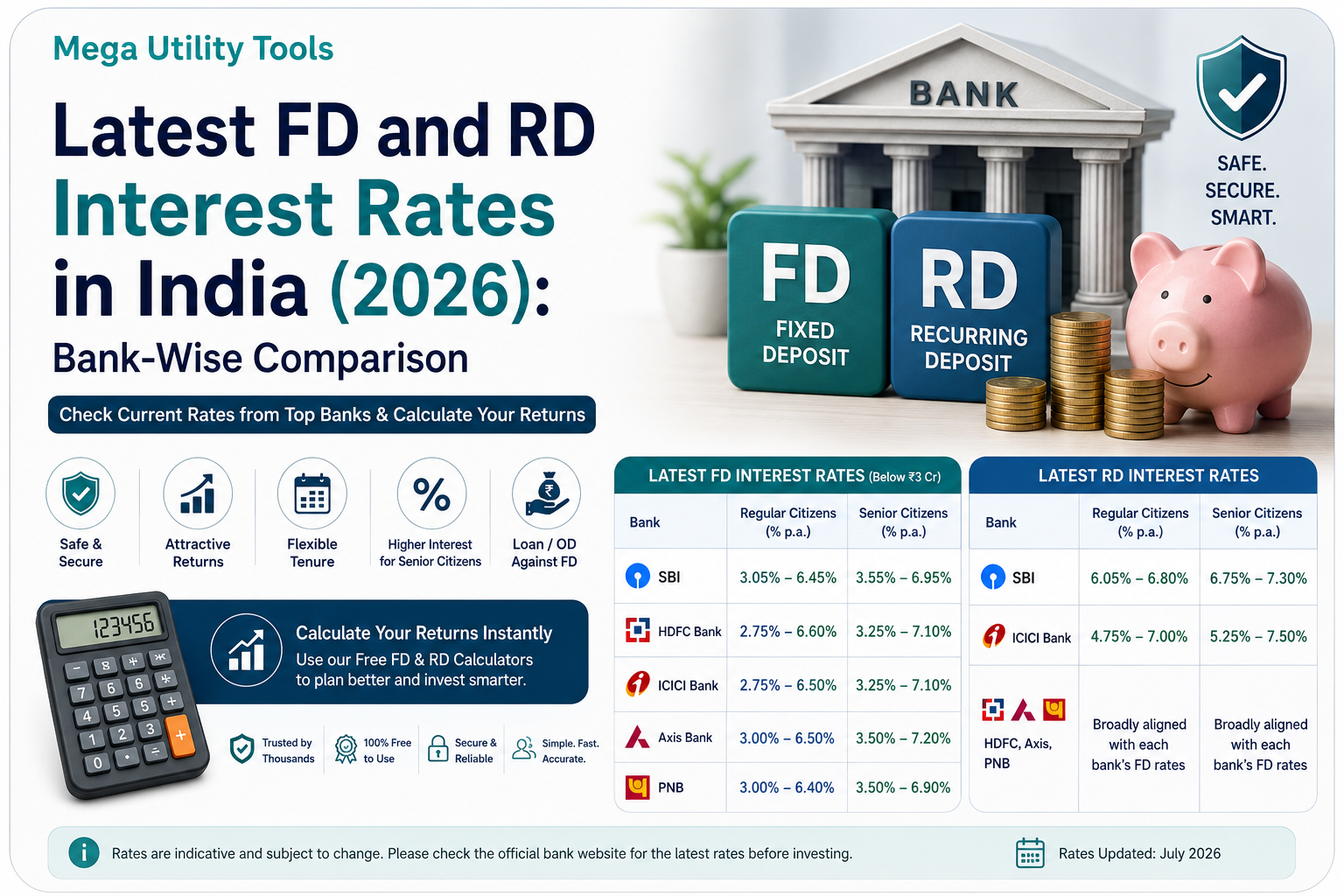
The table below shows approximate FD interest rate ranges (for deposits below ₹3 crore, tenures from 7 days to 10 years) as reported by major banks and verified aggregator sources.
| Bank | Regular Citizens | Senior Citizens | Source |
| State Bank of India (SBI) | 3.05% – 6.45% | 3.55% – 6.95% | SBI Official Rates |
| HDFC Bank | 2.75% – 6.60% | 3.25% – 7.10% | HDFC Bank FD Rates |
| ICICI Bank | 2.75% – 6.50% | 3.25% – 7.10% | ICICI Bank Rates |
| Axis Bank | 3.00% – 6.50% | 3.50% – 7.20% | Axis Bank Official Rates |
| Punjab National Bank (PNB) | 3.00% – 6.40% | 3.50% – 6.90% | PNB Official Rates |
Note: These are general reference ranges compiled from official bank pages and financial data aggregators as of July 2026. Actual rates depend on deposit amount, tenure slab, and any ongoing special schemes, so please check the linked official page before investing.
Latest RD Interest Rates by Bank
Recurring Deposit rates are generally aligned with a bank’s FD rates for a similar tenure, since both are term deposit products. Here’s what’s currently available for regular monthly RD accounts:
| Bank | Regular Citizens | Senior Citizens | Source |
| State Bank of India (SBI) | 6.05% – 6.80% | 6.75% – 7.30% | SBI Official RD Rates |
| ICICI Bank | 4.75% – 7.00% | 5.25% – 7.50% | ICICI Bank RD Rates |
| HDFC Bank, Axis Bank, PNB | Broadly aligned with each bank’s FD rates above | Broadly aligned with each bank’s FD rates above | Check official RD pages for exact current figures |
FD vs RD Interest Rates: Key Differences
While FD and RD rates are usually similar at the same bank, the two products work differently:
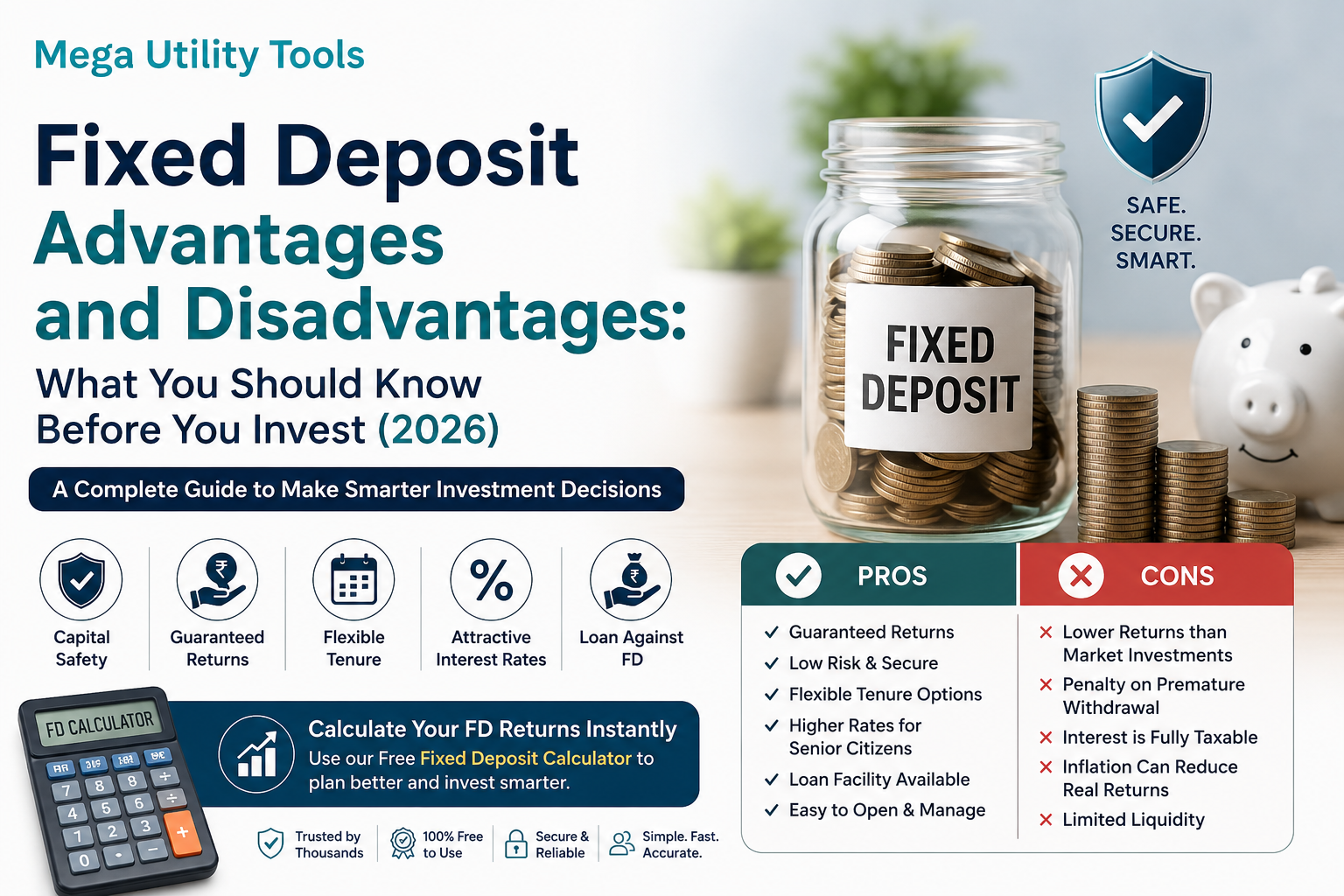
- Investment Style: An FD requires a lump sum upfront, while an RD lets you invest a fixed amount every month.
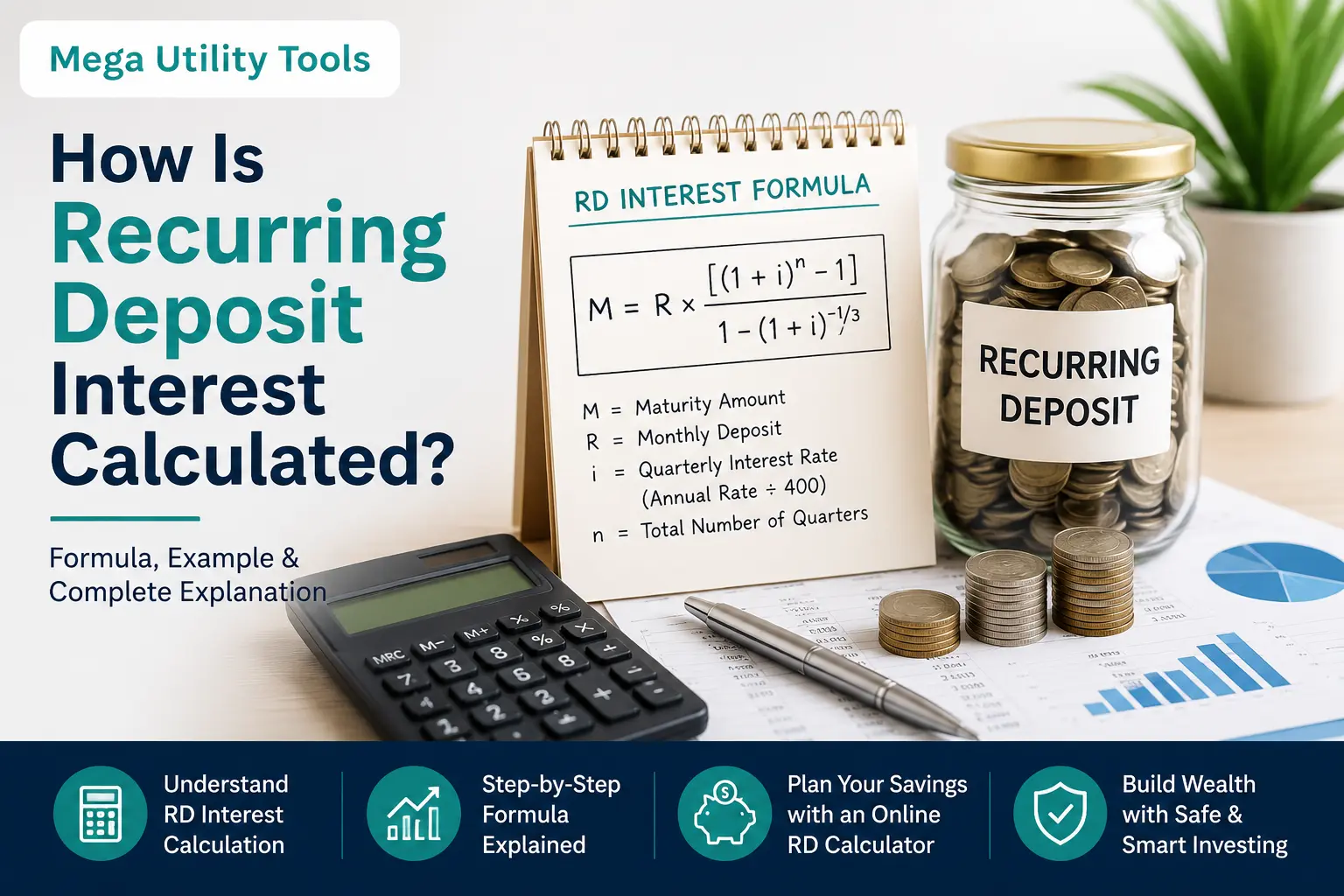
- Interest Calculation: FD interest is calculated on the full principal from day one. RD interest is calculated on each monthly instalment separately, since each deposit has a different holding period until maturity.
- Best Suited For: FDs work well if you already have a lump sum to invest. RDs suit those who want to build savings gradually through disciplined monthly contributions.
Factors That Affect the Rate You Actually Get
Even within the ranges shown above, the exact rate you receive depends on:
- Tenure Length: Banks typically offer their highest rates on specific “sweet spot” tenures, often between 1 and 3 years.
- Deposit Amount: Rates for bulk deposits (₹2 crore and above) often differ from retail deposit rates.
- Special or Festive Schemes: Banks periodically launch limited-period special FDs with slightly higher rates.
- Senior Citizen Status: As shown above, most banks add extra interest for depositors above 60 years of age.
How to Choose Between FD and RD Based on Current Rates
If you already have a lump sum and want predictable, low-risk returns without monthly commitments, an FD is usually the simpler option. If you’re building savings from your monthly income and prefer a disciplined approach, an RD can help you invest consistently without needing a large amount upfront.
Either way, it’s worth comparing the current rates across a few banks before committing, since even a small difference in interest rate can add up over a multi-year tenure.
Calculate Your Actual Returns
Once you’ve picked a bank and rate from the tables above, you can see exactly how much you’ll earn using our calculators:
- Use the Fixed Deposit Calculator to enter your deposit amount, chosen tenure, and the current FD rate to see your maturity value and total interest.
- Use the Recurring Deposit Calculator to estimate returns on your monthly RD contributions based on current rates.
Conclusion
FD and RD interest rates change periodically based on RBI policy and individual bank decisions, so what’s accurate today may shift in the coming months. We update this page regularly to reflect the latest publicly available rates, but for the most precise, real-time figures, always cross-check with the bank’s official website before opening a deposit. Bookmark this page and check back the next time you’re comparing FD or RD options.
This article is for general informational purposes only and does not constitute financial advice. Interest rates mentioned are indicative and subject to change at each bank’s discretion. Please verify current rates directly with the respective bank before making any investment decision.
Frequently Asked Questions
1. What is the current FD interest rate in India?
As of July 2026, FD interest rates among major Indian banks generally range from around 2.75% to 7.10% per annum, depending on the bank, tenure, and whether you qualify for the senior citizen rate. Check the bank-wise table above for specific ranges.
2. What is the current RD interest rate?
Recurring Deposit rates are broadly similar to FD rates at most banks, generally ranging between 4.75% and 7.50% per annum depending on the bank and tenure, with senior citizens typically receiving 0.50% extra.
3. Which banks offer the highest FD rates?
Rates change frequently, so the “highest” bank can shift over time. Among major banks, HDFC Bank and ICICI Bank have recently offered some of the higher rates for select tenures, but it’s best to compare current rates across banks before deciding.
4. Do senior citizens get higher FD/RD rates?
Yes. Most banks offer an additional 0.25% to 0.75% interest to senior citizens on both FD and RD products, across most tenures.
5. How often do FD rates change?
Banks can revise FD and RD rates any time, often in response to RBI repo rate changes or their own funding requirements. There’s no fixed schedule, which is why it’s important to check current rates before investing rather than relying on older figures.