Introduction
When it comes to safe and reliable investment options, Fixed Deposits (FDs) have remained one of the most trusted choices for investors. Whether you’re saving for a future expense, planning your retirement, or simply looking for a low-risk way to grow your money, a Fixed Deposit offers stability and predictable returns. Unlike market-linked investments, an FD provides a fixed interest rate for a chosen tenure, making it an attractive option for conservative investors.
However, before investing your hard-earned money, an important question arises: Is Fixed Deposit a good investment?
The answer depends on your financial goals, investment horizon, risk tolerance, and liquidity needs. While Fixed Deposits offer security and guaranteed returns, they may not always be the best choice for everyone. Understanding both their advantages and limitations can help you decide whether an FD aligns with your financial plan.
In this guide, we’ll explore how Fixed Deposits work, their key benefits, potential drawbacks, and the situations in which they make the most sense. You’ll also learn how using a Fixed Deposit Calculator can help you estimate returns before investing and make better financial decisions.
What Is a Fixed Deposit?
A Fixed Deposit (FD) is a financial product offered by banks and financial institutions where you deposit a lump sum amount for a fixed period at a predetermined interest rate. During the investment tenure, the interest rate remains unchanged, allowing you to know exactly how much your investment will earn by maturity.
Unlike a regular savings account, where interest rates may change over time, a Fixed Deposit Account offers stable and guaranteed returns. This makes it a preferred option for individuals who value safety over high-risk investments.
For example, if you invest ₹2,00,000 in a Fixed Deposit for five years at an annual interest rate of 7%, your money will earn interest throughout the tenure, and you’ll receive the principal along with the accumulated interest when the FD matures.
Before opening an FD, it’s helpful to use a Fixed Deposit Calculator to estimate the maturity amount and compare different investment options.
How Does a Fixed Deposit Work?
The process of investing in a Fixed Deposit is simple and straightforward.
First, you choose the amount you want to invest. Next, you select the investment tenure, which can range from a few months to several years depending on the bank’s offerings. The bank then applies the applicable interest rate and calculates your maturity value.
Once the deposit is created, the interest rate is generally locked in for the chosen period. This means market fluctuations do not affect your returns, giving you complete certainty about the final payout.
Many banks also allow investors to choose how they want to receive the interest. Depending on the FD type, interest may be paid monthly, quarterly, annually, or added to the principal and paid at maturity.
If you’re unsure about the expected returns, an Online Fixed Deposit Calculator can quickly calculate the maturity amount without requiring manual calculations.
Why Are Fixed Deposits So Popular?
Fixed Deposits have remained one of the most widely used investment products because they combine simplicity with financial security.
Here are some of the main reasons investors prefer FDs:
Guaranteed Returns
One of the biggest advantages of a Fixed Deposit is that the returns are predetermined. Since the interest rate is fixed at the time of investment, you know exactly how much you’ll receive on maturity.
Low Investment Risk
Unlike stocks or mutual funds, Fixed Deposits are not directly affected by market volatility. This makes them suitable for investors who prefer stability over high-risk, high-return investments.
Flexible Investment Tenure
Banks offer Fixed Deposits with different tenures, allowing you to choose a duration that matches your financial goals. Whether you’re saving for a short-term purchase or a long-term objective, you can select an FD that suits your needs.
Suitable for Different Financial Goals
A Fixed Deposit can be used for various purposes, including building an emergency fund, saving for education, planning a vacation, or creating a retirement corpus.
Fixed Deposit Interest Formula
Understanding how interest is calculated helps you estimate your potential returns more accurately.
For compound interest, many banks use the following formula:
A = P × (1 + r/n)^(n × t)
Where:
- A = Maturity Amount
- P = Principal (Initial Investment)
- r = Annual Interest Rate (in decimal form)
- n = Number of times interest is compounded each year
- t = Investment Tenure (in years)
While this formula accurately calculates the maturity value, manually solving it can be time-consuming. That’s why most investors prefer using an Online Fixed Deposit Calculator, which provides instant and accurate results after entering the investment amount, interest rate, and tenure.
For example, if you invest ₹3,00,000 in a Fixed Deposit at an annual interest rate of 7% for 5 years, the calculator can instantly estimate your maturity amount and the total interest earned. This helps you compare different investment scenarios and choose the option that best fits your financial goals.
Is Fixed Deposit a Good Investment?
For many investors, the answer is yes, especially if the primary objective is capital protection and predictable returns. A Fixed Deposit is particularly suitable for individuals who prefer low-risk investments and want to avoid market fluctuations.
However, every investment has its strengths and limitations. Before making a decision, it’s essential to evaluate both the pros and cons of Fixed Deposits and compare them with your financial goals, expected returns, and liquidity requirements.
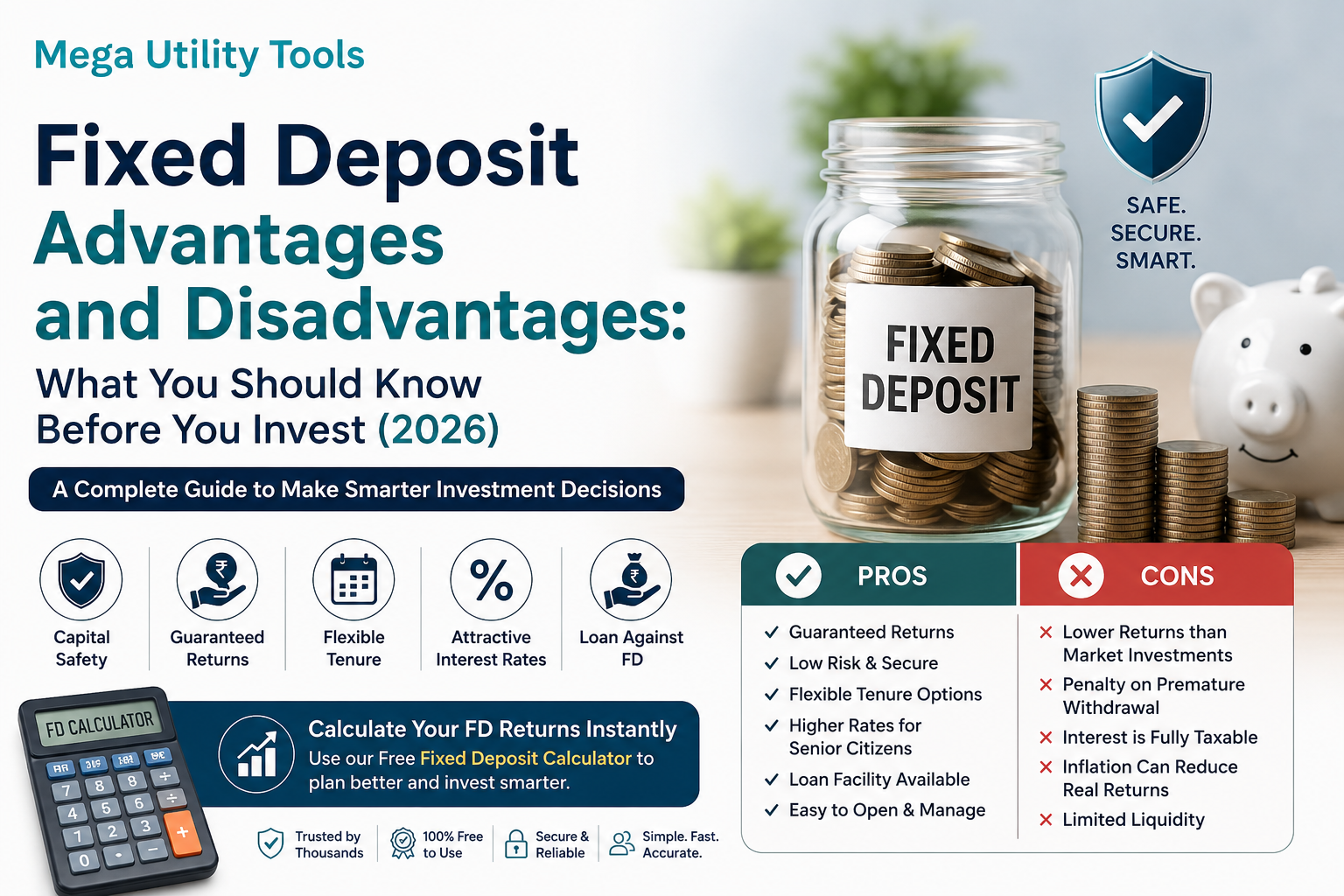
The Pros of Investing in a Fixed Deposit
A Fixed Deposit (FD) has remained one of the most popular investment options because it offers stability, simplicity, and predictable returns. While it may not generate the high returns associated with market-linked investments, it provides several benefits that make it an important part of a balanced financial portfolio.
1. Capital Protection
One of the biggest advantages of a Fixed Deposit is the safety of your investment. Unlike shares or mutual funds, the value of your FD does not fluctuate with market conditions. As long as you keep the deposit until maturity, your principal amount remains secure, making it suitable for conservative investors.
2. Guaranteed Returns
The interest rate is fixed when you open the deposit, which means you know exactly how much you’ll receive at maturity. This certainty makes financial planning easier because your returns are not affected by changes in the market.
3. Flexible Investment Options
Banks and financial institutions offer Fixed Deposits with different tenures, ranging from a few months to several years. This flexibility allows you to choose an investment period based on your financial goals, whether you’re saving for a vacation, higher education, a home renovation, or retirement.
4. Easy to Open and Manage
Opening a Fixed Deposit Account is straightforward. Most banks allow you to create an FD online through internet banking or mobile banking without visiting a branch. The process usually takes only a few minutes if you already have a savings account with the bank.
5. Loan Against Fixed Deposit
Many banks allow customers to borrow against their Fixed Deposit instead of breaking it before maturity. This feature can be helpful during financial emergencies because it provides access to funds while allowing your investment to continue earning interest.
The Cons of Investing in a Fixed Deposit
Although Fixed Deposits offer several advantages, they also have certain limitations that every investor should understand before investing.
Lower Returns Compared to Market Investments
Fixed Deposits provide stable returns, but their growth potential is generally lower than investments such as equity mutual funds or stocks over the long term. Investors seeking higher wealth creation may consider diversifying into market-linked products based on their risk tolerance.
Inflation Can Reduce Real Returns
Inflation affects the purchasing power of money over time. If inflation is higher than your FD interest rate, the real value of your returns may decrease. This is one reason why it’s important to view Fixed Deposits as one part of a diversified investment strategy rather than the only investment.
Limited Liquidity
Although many banks allow premature withdrawal, doing so may result in reduced interest earnings or an early withdrawal penalty. If you expect to need your money soon, consider choosing a suitable tenure or maintaining an emergency fund separately.
Tax on Interest Income
Interest earned from Fixed Deposits may be taxable according to the tax laws applicable to you. It’s a good idea to understand the tax implications before investing and consult a qualified tax professional if you need personalized advice.
Who Should Invest in a Fixed Deposit?
A Fixed Deposit can be a suitable investment choice for many types of investors, including:
- Individuals looking for stable and predictable returns.
- First-time investors who prefer lower investment risk.
- Senior citizens seeking regular and relatively stable income.
- People saving for short-term or medium-term financial goals.
- Investors who want to diversify their overall portfolio with lower-risk assets.
If your primary goal is capital preservation rather than aggressive wealth creation, a Fixed Deposit may be an appropriate option.
Fixed Deposit vs Other Investment Options
Before investing, it’s helpful to compare a Fixed Deposit with other popular financial products.
| Investment Option | Risk Level | Return Potential | Suitable For |
| Fixed Deposit | Low | Fixed | Stable, predictable savings |
| Recurring Deposit | Low | Fixed | Monthly savings habit |
| Mutual Funds | Moderate to High | Market-linked | Long-term wealth creation |
| Stocks | High | Market-linked | Experienced investors seeking higher growth |
| Savings Account | Very Low | Lower | Daily banking and emergency funds |
Each investment serves a different purpose. The right choice depends on your financial objectives, investment horizon, and comfort with risk.
Tips Before Opening a Fixed Deposit
Before investing your money, keep these practical tips in mind:
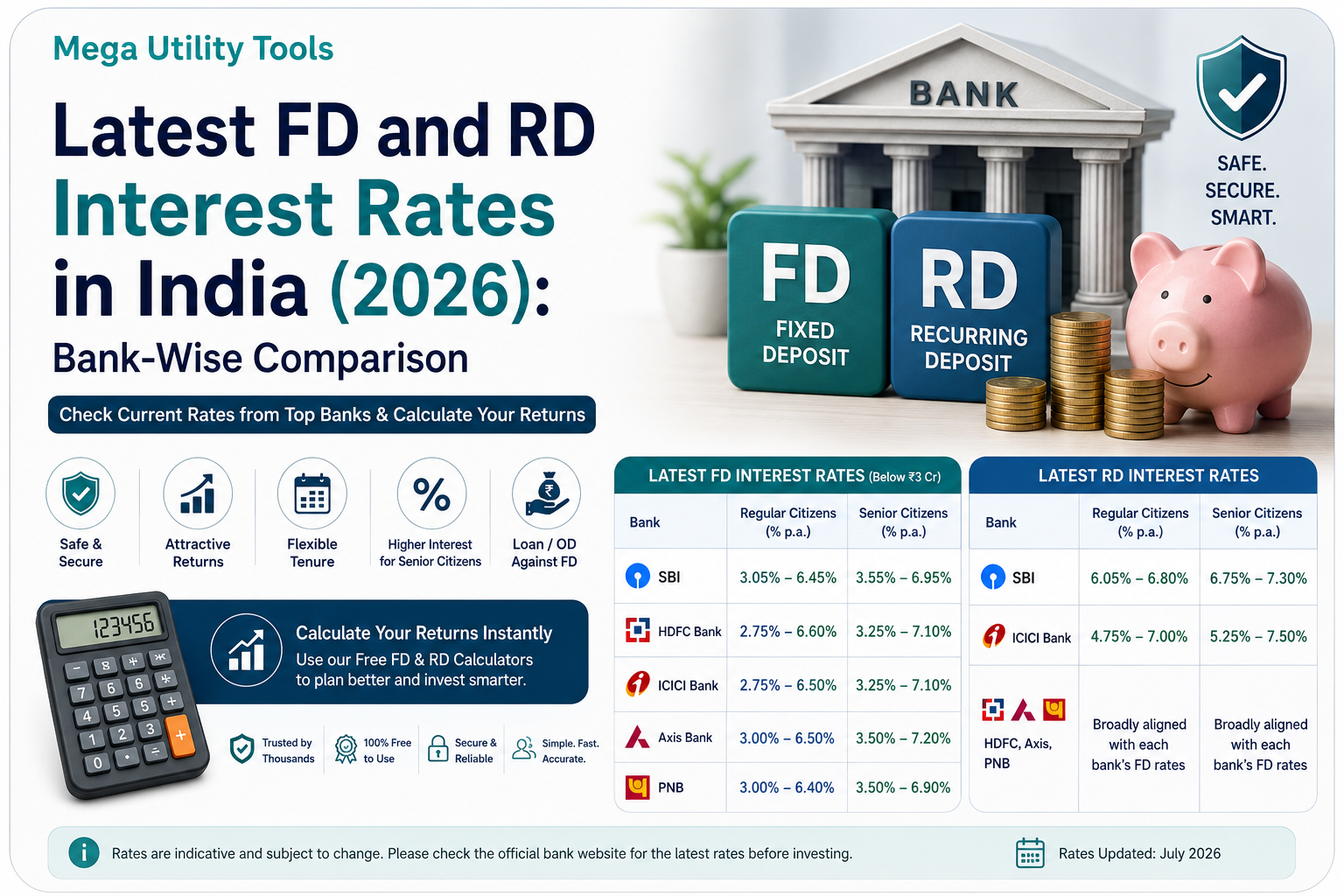
- Compare interest rates offered by different banks and financial institutions.
- Choose an investment tenure that matches your financial goals.
- Read the terms related to premature withdrawal and penalties.
- Check how frequently interest is compounded, as this can affect your maturity amount.
- Use a Fixed Deposit Calculator to estimate your returns before investing.
- Consider whether you need periodic interest payouts or a cumulative FD where interest is paid at maturity.
Taking a few minutes to compare options can help you make a more informed investment decision.
Conclusion
So, is Fixed Deposit a good investment? The answer depends on your financial goals and investment preferences.
If you value capital safety, guaranteed returns, and predictable growth, a Fixed Deposit remains one of the most dependable investment options available. It is particularly useful for conservative investors, retirees, and anyone planning for specific financial goals without taking on significant market risk.
However, if your primary objective is long-term wealth creation and you are comfortable with market fluctuations, you may also consider other investment options as part of a diversified portfolio.
Before opening a Fixed Deposit Account, compare available interest rates, understand the terms and conditions, and use an Online Fixed Deposit Calculator to estimate your maturity amount. Planning ahead helps you choose an investment that aligns with your financial needs and long-term objectives.
Frequently Asked Questions (FAQs)
1. Is a Fixed Deposit a safe investment?
Yes. Fixed Deposits are generally considered one of the lower-risk investment options because they offer a fixed interest rate and predetermined maturity value. However, the level of protection available may depend on applicable banking regulations in your country.
2. How does a Fixed Deposit work?
You deposit a lump sum with a bank or financial institution for a fixed tenure. The institution pays interest at the agreed rate, and you receive the principal along with the accumulated interest when the deposit matures.
3. Can I withdraw my Fixed Deposit before maturity?
Many banks allow premature withdrawal, but it may reduce the interest earned or involve an early withdrawal penalty. Check your bank’s specific terms before investing.
4. How can I calculate my Fixed Deposit returns?
You can use an Online Fixed Deposit Calculator by entering the investment amount, interest rate, and tenure. The calculator instantly estimates your maturity amount and total interest earned.
5. Is Fixed Deposit better than a Savings Account?
A Fixed Deposit generally offers a higher interest rate than a standard savings account, but the funds are locked in for a chosen period. A savings account provides easier access to money for day-to-day needs.