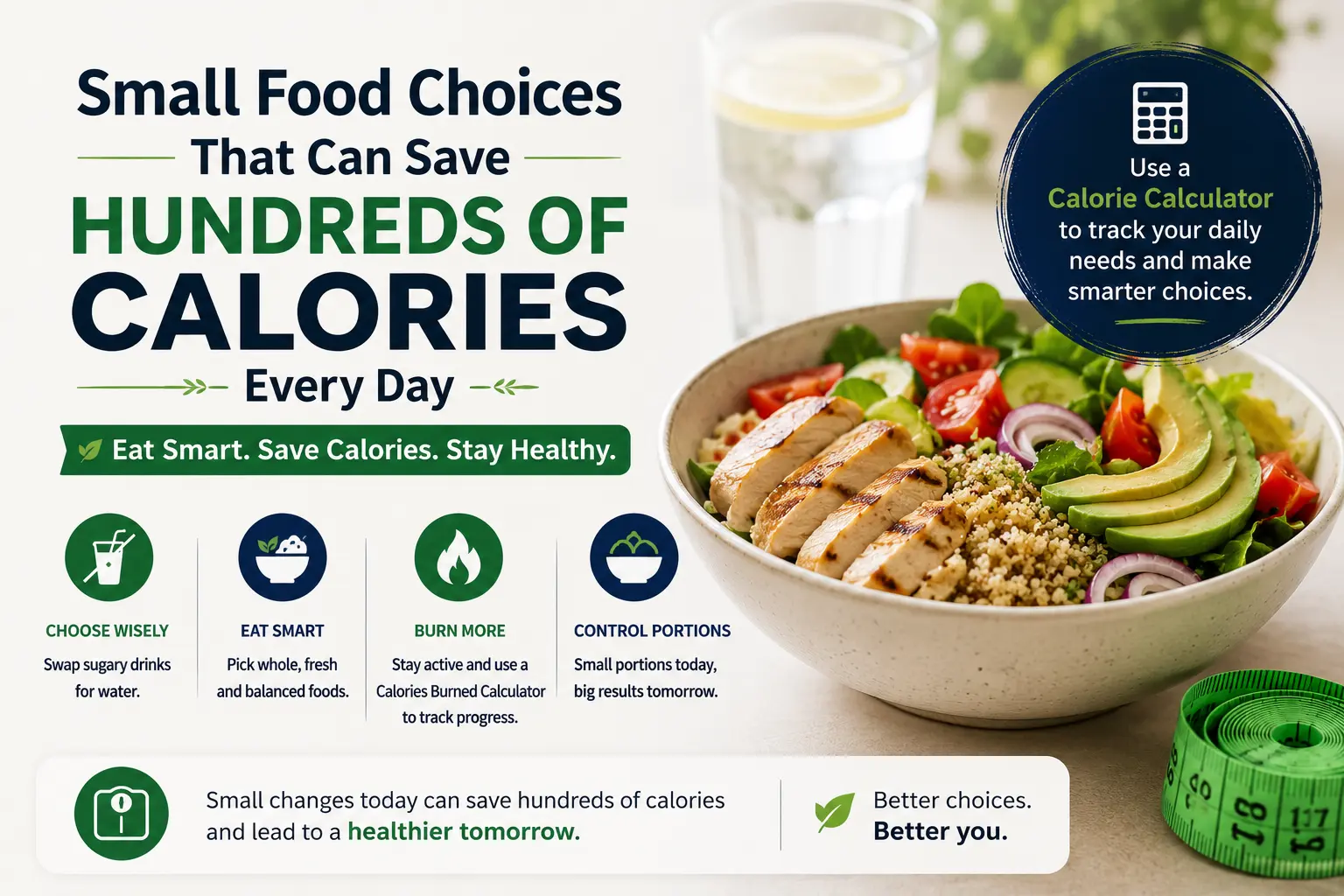
Losing weight doesn’t always require strict diets, expensive meal plans, or giving up every food you enjoy. In many cases, the biggest difference comes from the smallest daily choices. Swapping one sugary drink for water, choosing grilled instead of fried food, or reducing portion sizes can quietly eliminate hundreds of unnecessary calories from your diet without making you feel deprived.
Many people believe that weight loss only happens through dramatic lifestyle changes. The reality is often much simpler. Small, sustainable habits repeated every day can have a greater long-term impact than short-lived diet trends.
If you’re working toward a healthier lifestyle, understanding your daily calorie intake is the first step. Using a Calorie Calculator can help you estimate how many calories your body needs, making it easier to build healthier eating habits that last.
Let’s explore practical food choices that can help you reduce calories naturally while still enjoying satisfying meals.
Why Small Changes Often Lead to Bigger Results
One unhealthy meal rarely causes weight gain, just as one healthy meal won’t transform your health overnight.
What truly matters is your daily routine.
Saving just 150–300 calories each day may not seem significant, but over weeks and months, these small reductions can support steady progress toward your health goals.
Unlike restrictive diets, small adjustments are easier to maintain because they don’t feel overwhelming.
Consistency almost always beats perfection.
1. Choose Water Instead of Sugary Drinks
Soft drinks, sweetened coffee, packaged juices, and flavored beverages often contain a surprising number of calories.
Replacing just one sugary drink with water or unsweetened beverages each day can significantly reduce your calorie consumption without affecting your hunger.
This simple habit also helps improve hydration, energy levels, and overall well-being.
2. Watch Your Portion Size Before Your Plate
Many people eat more simply because larger portions are available.
Instead of filling your plate automatically:
- Start with smaller servings.
- Eat slowly.
- Wait a few minutes before taking another portion.
Your brain needs time to recognize fullness, and smaller portions often feel just as satisfying when eaten mindfully.
3. Snack Smarter Between Meals
Snacking isn’t the problem.
Mindless snacking is.
Rather than reaching for chips or sugary biscuits, consider healthier alternatives like:
- Fresh fruit
- Greek yogurt
- Unsalted nuts (in moderation)
- Roasted chickpeas
- Vegetable sticks with hummus
These options provide nutrients while helping you stay satisfied between meals.
4. Cook More Meals at Home
Restaurant meals and food delivery often contain hidden oils, butter, sugar, and large serving sizes.
Preparing meals at home gives you greater control over:
- Ingredients
- Portion sizes
- Cooking methods
- Calories
Even cooking just three or four additional meals each week can make a noticeable difference over time.
5. Grill, Bake, or Steam Instead of Frying
Cooking methods matter just as much as ingredients.
Foods prepared by grilling, baking, roasting, steaming, or air frying generally require less added oil than deep-frying.
This simple adjustment can reduce unnecessary calories while preserving flavor and texture.
6. Don’t Drink Your Calories Without Realizing It
Many beverages contain calories that don’t provide lasting fullness.
Examples include:
- Sweetened coffee drinks
- Milkshakes
- Energy drinks
- Sweetened tea
- Flavored smoothies
Choosing lower-calorie beverages helps control your daily calorie intake without making major dietary changes.
7. Add More Protein to Stay Full Longer
Protein helps increase satiety, making it easier to avoid unnecessary snacking later in the day.
Good protein sources include:
- Eggs
- Fish
- Chicken
- Lentils
- Beans
- Cottage cheese
- Tofu
Balanced meals containing protein often reduce cravings naturally.
8. Read Nutrition Labels Before Buying Packaged Foods
Food packaging can sometimes be misleading.
Products labeled as:
- Low fat
- Natural
- Healthy
- Organic
may still contain significant amounts of sugar or calories.
Checking nutrition labels helps you make informed decisions rather than relying solely on marketing claims.
9. Eat Without Distractions
Watching television, scrolling on your phone, or working while eating often leads to consuming more food than necessary.
Mindful eating encourages you to:
- Notice hunger signals.
- Appreciate your meals.
- Recognize fullness sooner.
This simple habit supports healthier eating without requiring strict food rules.
10. Make Healthy Swaps Instead of Eliminating Foods
Completely removing your favorite foods often makes healthy eating difficult to sustain.
Instead, try practical swaps such as:
- Brown rice instead of refined rice occasionally.
- Whole-grain bread instead of white bread.
- Fresh fruit instead of sugary desserts.
- Air-popped popcorn instead of potato chips.
- Plain yogurt instead of sweetened yogurt.
Small substitutions accumulate into meaningful improvements over time.
Understanding Calories for Weight Loss
Many people believe eating as little as possible is the fastest route to losing weight.
In reality, extremely low-calorie diets can leave you feeling tired, hungry, and difficult to sustain.
Successful calories for weight loss involve creating a reasonable calorie deficit while continuing to meet your body’s nutritional needs.
A balanced approach is usually more effective than drastic restriction.
Don’t Forget About Physical Activity
Food choices play a major role in weight management, but movement also matters.
Walking, cycling, swimming, strength training, or even taking the stairs more often can contribute to your overall energy balance.
If you’re curious about how much energy different activities use, a Calories Burned Calculator can help estimate the calories you burn during exercise and daily movement.
Combining healthier eating with regular activity creates a more sustainable lifestyle.
Use Smart Tools to Plan Your Health Goals
Healthy living becomes easier when you understand your body’s needs.
Along with a Calorie Calculator, you can use a BMI Calculator to understand whether your weight falls within a recommended range. If you’re planning balanced meals based on your body’s energy requirements.
Using these tools together provides a clearer picture of your overall health rather than relying on guesswork.
Small Choices That Add Up Over Time
Imagine making just three small improvements every day:
- Skip one sugary drink.
- Walk for 20 minutes.
- Choose grilled food instead of fried.
Individually, these changes may seem minor.
Repeated consistently for months, they can make a meaningful difference to your eating habits, energy levels, and overall health.
The goal isn’t perfection.
The goal is progress.
Final Thoughts
Healthy eating doesn’t require extreme diets or complicated meal plans. Often, the simplest daily decisions create the biggest long-term results.
By making thoughtful food choices, understanding your daily calorie intake, and using a reliable Calorie Calculator, you can make informed decisions that support your health without feeling overwhelmed.
Whether your goal is improving fitness, managing your calories for weight loss, or simply becoming more mindful about nutrition, remember that lasting success comes from habits you can maintain—not quick fixes.
Start with one small change today. Over time, those everyday choices can add up to hundreds of calories saved, healthier routines, and a stronger foundation for lifelong well-being.