Typing your height and weight into a BMI Calculator takes only a few seconds, but understanding what the result actually means requires a little more context. Many people see a number, compare it with a BMI chart, and immediately assume they’re either healthy or unhealthy. In reality, Body Mass Index is just one piece of the puzzle.
Whether you’re beginning a weight-loss journey, trying to maintain your current fitness level, or simply curious about your health, knowing how BMI works—and what it doesn’t tell you—can help you make better decisions.
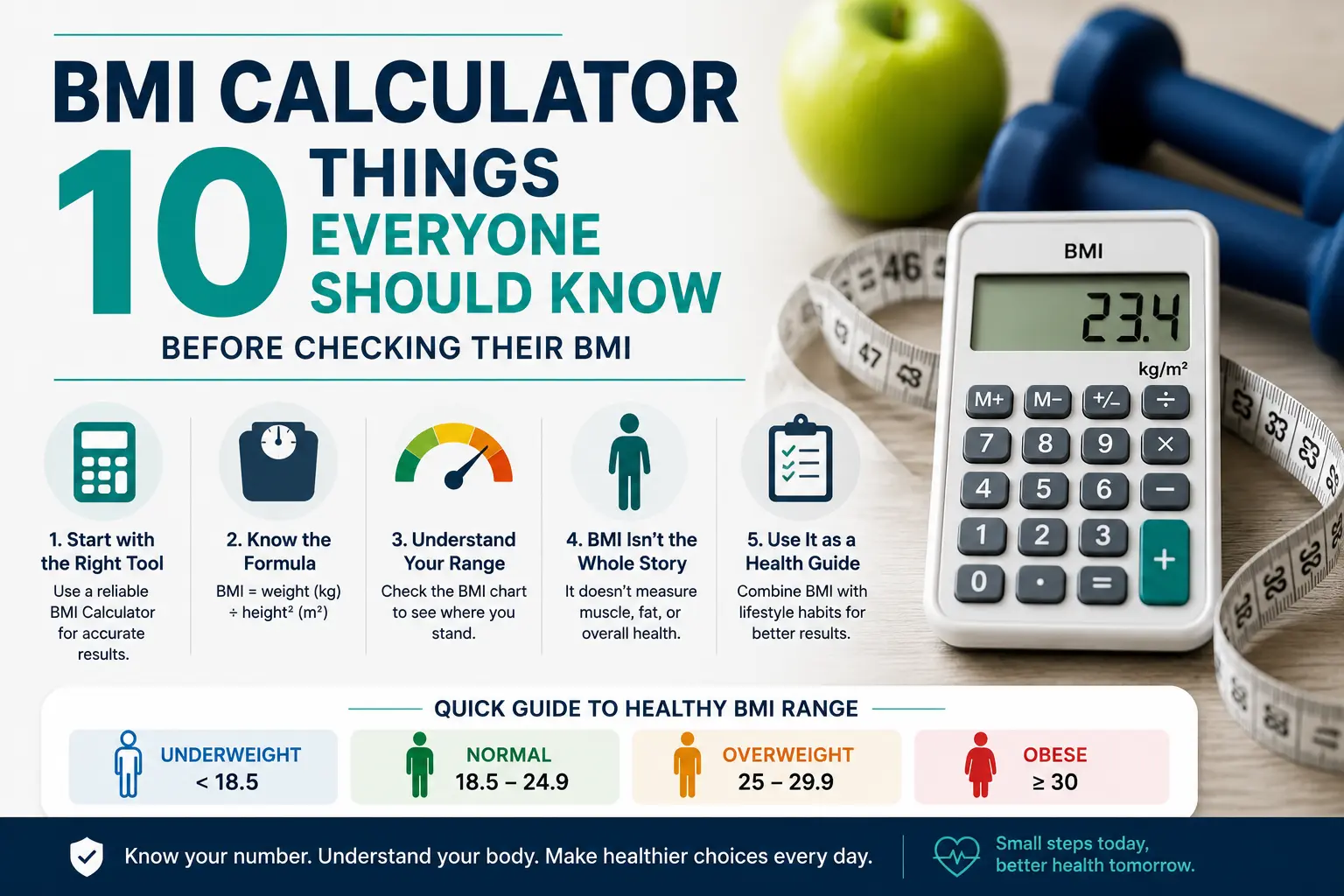
Before checking your BMI, here are ten important things everyone should know.
1. BMI Is a Starting Point, Not a Final Health Report
One of the biggest misconceptions is believing that BMI tells the complete story about your health.
A Body Mass Index score is a screening tool designed to estimate whether your weight is appropriate for your height. It does not diagnose diseases, measure fitness levels, or evaluate your lifestyle habits.
Think of BMI as the opening chapter of your health journey rather than the entire book.
2. Knowing How to Calculate BMI Helps You Understand Your Results
Even though an online BMI Calculator provides instant results, understanding how to calculate BMI helps you interpret your score more confidently.
The formula is simple:
BMI = Weight (kg) ÷ Height² (m²)
For example:
- Weight: 72 kg
- Height: 1.75 m
BMI = 72 ÷ (1.75 × 1.75) = 23.5
While the calculation itself is straightforward, the meaning behind the result depends on several additional factors, including age, muscle mass, and overall health.
3. A Healthy BMI Doesn’t Always Mean You’re Healthy
Many people celebrate landing within a healthy BMI range, but a normal BMI alone doesn’t guarantee good health.
Someone with a healthy BMI could still have:
- High cholesterol
- Elevated blood sugar
- High blood pressure
- Poor eating habits
- A sedentary lifestyle
Likewise, someone slightly above the recommended BMI range may be physically active, eat nutritious meals, and have excellent cardiovascular health.
That’s why healthcare professionals evaluate BMI alongside other health indicators.
4. Muscle and Fat Are Not the Same Thing
BMI measures weight—not body composition.
Imagine two people with exactly the same height and weight:
- One regularly lifts weights and has a high percentage of lean muscle.
- The other has a higher percentage of body fat.
Their BMI could be identical, even though their overall health profiles are very different.
This is one reason athletes and fitness enthusiasts often receive misleading BMI classifications.
5. Your BMI Changes as Your Lifestyle Changes
Many people think BMI is a permanent number.
It isn’t.
Your BMI naturally changes when your weight changes. Small improvements in daily habits—such as walking more, eating balanced meals, sleeping well, and staying physically active—can gradually move your BMI in a healthier direction.
Rather than checking your BMI every week, monitor it every few months to understand long-term progress.
6. The BMI Chart Is a Guide, Not a Label
A BMI chart helps classify weight into general categories such as underweight, healthy weight, overweight, and obesity.
However, these categories are designed for broad population screening rather than personalized health assessments.
Your doctor may interpret your BMI differently depending on factors like:
- Age
- Gender
- Medical history
- Ethnicity
- Fitness level
- Existing health conditions
Instead of viewing the chart as a label, use it as a helpful reference point.
7. Age Can Influence How BMI Is Interpreted
A BMI score doesn’t always carry the same meaning throughout life.
Older adults naturally lose muscle mass as they age, while younger adults may have higher muscle density due to greater physical activity.
This means two individuals with the same BMI could have very different body compositions depending on their age.
Healthcare providers often consider these differences before making recommendations.
8. BMI Works Best When Combined with Other Measurements
One number should never define your health.
To gain a more complete picture, combine your BMI with other useful measurements such as:
- Waist circumference
- Body fat percentage
- Blood pressure
- Physical activity level
- Eating habits
- Sleep quality
You can also compare your BMI with an Ideal Weight Calculator to better understand whether your current weight aligns with your personal health goals rather than relying on BMI alone.
Looking at multiple health indicators provides a much more balanced perspective.
9. Don’t Compare Your BMI with Someone Else’s
It’s natural to compare yourself with friends, family members, or people you see online.
However, every body is unique.
Genetics, metabolism, muscle mass, bone structure, lifestyle, and age all influence body composition.
Instead of asking, “Why is my BMI different?” ask a more meaningful question:
“Am I becoming healthier than I was a few months ago?”
That mindset leads to healthier and more sustainable progress.
10. Use Your BMI as Motivation—Not as a Judgment
Perhaps the most important thing to remember is that BMI should encourage positive action rather than create unnecessary stress.
Whether your result falls below, within, or above the recommended range, it represents an opportunity to evaluate your lifestyle and make gradual improvements.
Healthy habits don’t happen overnight.
Small, consistent choices—such as eating nutritious meals, exercising regularly, staying hydrated, and getting enough sleep—often have a much greater impact on long-term health than chasing a specific BMI number.
Your goal should always be better health, not just a lower score.
Common Questions People Ask Before Checking Their BMI
Before using a BMI Calculator, many users have similar questions.
Is BMI accurate?
BMI is considered a reliable screening tool for most adults, but it doesn’t measure body fat directly or account for muscle mass.
How often should I check my BMI?
Checking every two to three months is generally enough to monitor long-term progress unless advised otherwise by a healthcare professional.
Should children use the same BMI chart?
No. Children and teenagers use age- and sex-specific BMI percentiles rather than standard adult BMI categories.
Is BMI useful during weight loss?
Yes. While it shouldn’t be your only measurement, BMI can help track overall progress when combined with other health indicators.
Final Thoughts
A BMI Calculator is one of the easiest tools for understanding whether your weight falls within a recommended range, but it’s only the beginning of your health journey.
By learning how to calculate BMI, understanding the healthy BMI range, interpreting the BMI chart correctly, and recognizing the purpose of Body Mass Index, you’ll make far better decisions than simply focusing on a single number.
The most meaningful health improvements come from consistent habits—not quick fixes. Use your BMI as a guide, combine it with other health measurements, and focus on building a lifestyle that supports your long-term well-being.