Introduction: Why EMI Matters Before Taking a Loan
Buying a home, purchasing a car, funding higher education, or managing unexpected expenses often requires borrowing money. Loans can help achieve important life goals, but they also create financial commitments that may last for several years.
Before applying for any loan, one term you’ll encounter frequently is EMI.
Many borrowers focus only on loan approval or interest rates without fully understanding how EMIs affect their monthly finances. This can lead to budgeting challenges, repayment difficulties, and unnecessary financial stress.
Understanding EMI calculations before taking a loan allows you to make better financial decisions and choose a repayment plan that fits comfortably within your budget.
In this guide, we’ll explain EMIs in simple language, discuss how they are calculated, and explore how they influence your overall loan repayment journey.
Decoding EMI in Simple Terms
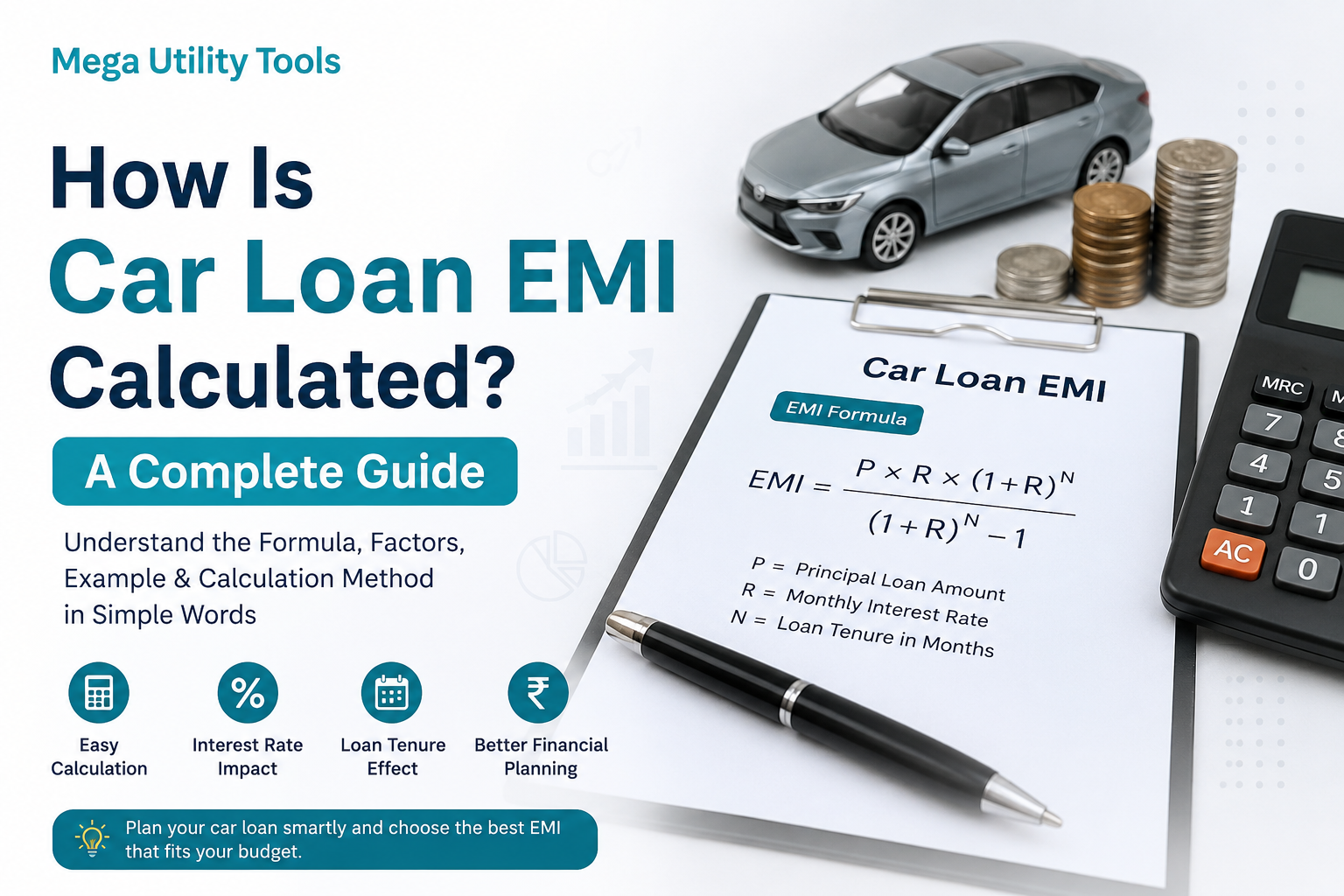
EMI stands for Equated Monthly Installment.
It is the fixed amount a borrower pays every month to repay a loan over a specified period.
An EMI consists of two components:
Principal Amount
The original amount borrowed from the lender.
Interest Amount
The cost charged by the lender for providing the loan.
Each monthly EMI payment includes a combination of both principal and interest.
As the loan progresses:
- Interest payments gradually decrease.
- Principal repayments gradually increase.
This process continues until the loan is fully repaid.
How EMI Is Calculated
Most lenders use a standard formula to calculate Equated Monthly Installment.
The calculation depends on:
- Loan amount
- Interest rate
- Loan tenure
Although the mathematical formula may appear complicated, borrowers don’t need to calculate it manually.
Modern EMI Calculators can instantly provide accurate results.
Example
Suppose:
- Loan Amount: ₹10,00,000
- Interest Rate: 9% per year
- Loan Tenure: 10 years
The lender calculates a fixed EMI amount that remains consistent throughout the repayment period unless the loan terms change.
This makes financial planning easier because borrowers know their monthly obligation in advance.
The Three Factors That Influence EMI
Every Equated Monthly Installment is primarily determined by three variables.
1. Loan Amount
The larger the loan amount, the higher the EMI.
Example
A ₹20 lakh loan generally produces a higher EMI than a ₹10 lakh loan under identical conditions.
Borrow only what you genuinely need.
Higher borrowing increases both EMI obligations and total interest costs.
2. Interest Rate
Interest rates directly impact monthly repayment amounts.
Even a small difference in interest rates can significantly affect total repayment costs over time.
Example
A loan at 8% interest may cost considerably less than a similar loan at 10% interest over several years.
Comparing interest rates before borrowing can lead to substantial savings.
3. Loan Tenure
Loan tenure refers to the repayment period.
Shorter Tenure
Advantages:
- Lower total interest paid
- Faster debt repayment
Disadvantages:
- Higher monthly EMI
Longer Tenure
Advantages:
- Lower monthly EMI
- Improved short-term affordability
Disadvantages:
- Higher total interest paid
Choosing the right tenure requires balancing affordability and long-term cost.
Real-Life Loan Examples
Let’s compare two scenarios.
Scenario A
Loan Amount: ₹5,00,000
Tenure: 3 Years
Result:
Higher monthly EMI but lower overall interest cost.
Scenario B
Loan Amount: ₹5,00,000
Tenure: 7 Years
Result:
Lower monthly EMI but higher overall interest cost.
This example demonstrates an important principle:
A lower EMI doesn’t always mean a cheaper loan.
Borrowers should evaluate both monthly affordability and total repayment cost.
How EMI Affects Your Monthly Budget
One of the biggest mistakes borrowers make is underestimating the impact of EMIs on household finances.
Your EMI becomes a fixed monthly commitment similar to:
- Rent
- Utility bills
- Insurance premiums
- School fees
Why This Matters
A high EMI can:
- Reduce monthly savings
- Limit investment opportunities
- Increase financial stress
- Affect emergency preparedness
Financial experts often recommend keeping total EMIs within a manageable percentage of monthly income.
This helps maintain financial flexibility while reducing repayment risks.
Using a Budget Calculator alongside an EMI Calculator can provide a clearer picture of affordability.
Strategies to Manage EMIs Effectively
Borrow Responsibly
Avoid borrowing more than necessary simply because you qualify for a larger loan.
Compare Multiple Lenders
Different lenders may offer varying interest rates and loan terms.
Research can lead to better loan conditions.
Choose a Comfortable Tenure
Select a tenure that balances affordability and total interest costs.
Maintain an Emergency Fund
Unexpected financial challenges can affect repayment ability.
Emergency savings provide valuable protection.
Consider Prepayments
Making occasional prepayments may help reduce:
- Outstanding principal
- Interest burden
- Loan tenure
Always review lender policies before making prepayments.
Hidden Mistakes Borrowers Often Make
Focusing Only on Equated Monthly Installment Amount
Many borrowers select loans solely based on low EMIs.
This can result in longer repayment periods and higher interest costs.
Ignoring Additional Charges
Loans may include:
- Processing fees
- Documentation charges
- Insurance costs
These expenses should be considered during planning.
Borrowing Beyond Budget
A loan should support your goals, not create financial strain.
Skipping EMI Calculations
Estimating repayments without proper calculations can lead to unrealistic expectations.
Using online tools eliminates guesswork.
How Online Calculators Simplify Loan Planning
Financial calculators make borrowing decisions more informed and transparent.
- EMI Calculator: Estimate monthly loan installments instantly.
- Loan Calculator: Understand total borrowing costs.
- Interest Calculator: Evaluate potential interest payments.
- Percentage Calculator: Perform related financial calculations quickly.
These tools help borrowers compare options and choose suitable repayment plans.
Frequently Asked Questions
1. What is an Equated Monthly Installment?
EMI stands for Equated Monthly Installment, which is the fixed monthly payment made toward repaying a loan.
2. What factors affect EMI calculations?
EMIs are primarily determined by loan amount, interest rate, and loan tenure.
3. Does a longer tenure reduce EMI?
Yes. Longer loan tenures generally reduce monthly EMI amounts but increase total interest costs.
4. Why should I use an EMI Calculator?
An EMI Calculator helps estimate monthly repayments accurately and allows borrowers to compare different loan scenarios.
5. Can I reduce my EMI burden?
Borrowers may reduce EMI pressure by selecting appropriate loan terms, making prepayments, or choosing lower interest rates when available.
Conclusion
Understanding EMI calculations is essential before taking any loan. EMIs directly affect monthly budgets, savings potential, and long-term financial stability. While lower EMIs may seem attractive, borrowers should also consider total interest costs and repayment duration.
By understanding how loan amount, interest rates, and tenure influence EMIs, you can make informed borrowing decisions that align with your financial goals. Tools such as an EMI Calculator, Loan Calculator, and Budget Calculator make it easier to evaluate loan affordability and avoid costly mistakes.
Responsible borrowing begins with understanding your repayment obligations. The more informed you are, the more confidently you can manage your financial future.